KSP - District 9

Riyadh, KSA

2025

Area: 250,000 sqm

DESIGN INTENT

Blending tradition with modernity, the project envisions a city within a park, where architecture enhances cultural heritage while responding to climatic conditions.

The approach is defined by:

  • Timeless design through colonnades, arcades, and curated materials

  • Human-centric planning prioritizing walkability, shade, and connectivity

  • Sustainability via passive cooling, native landscaping, and adaptable infrastructure

URBAN MORPHOLOGY

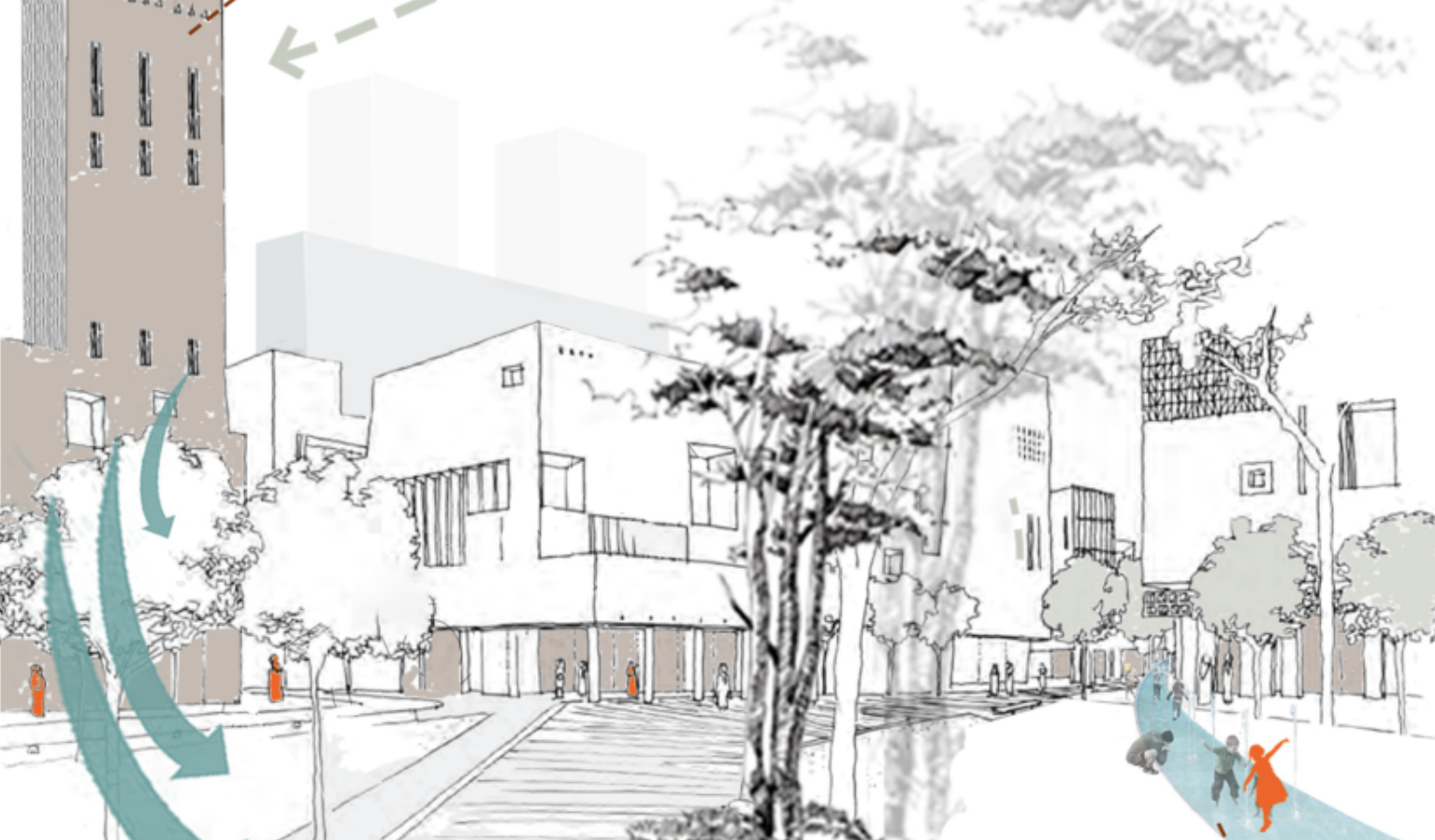
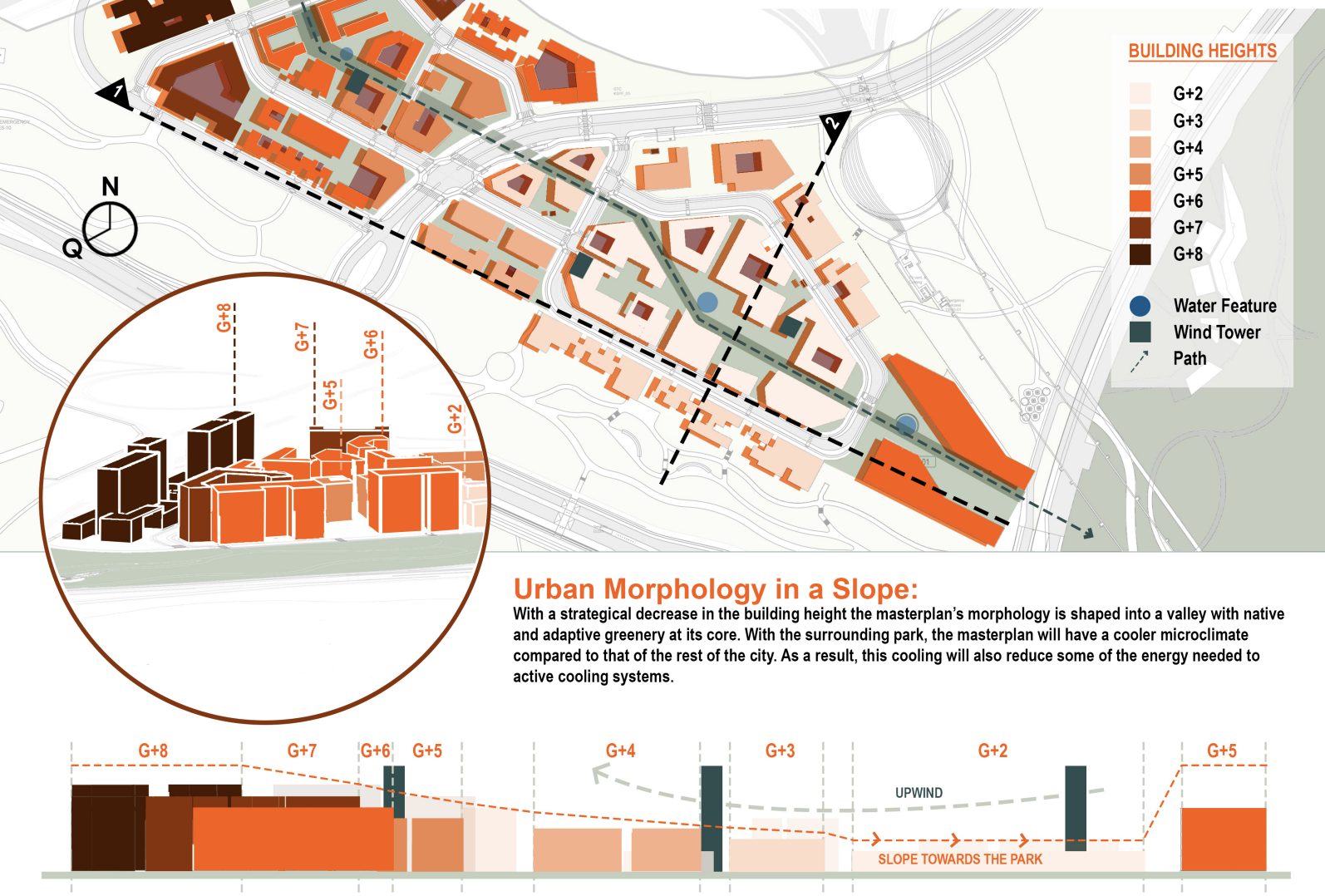
The masterplan is shaped as a valley, with greenery at its core, generating a cooler microclimate compared to the surrounding city and reducing reliance on active cooling.

Its form:

  • Channels prevailing winds for natural ventilation

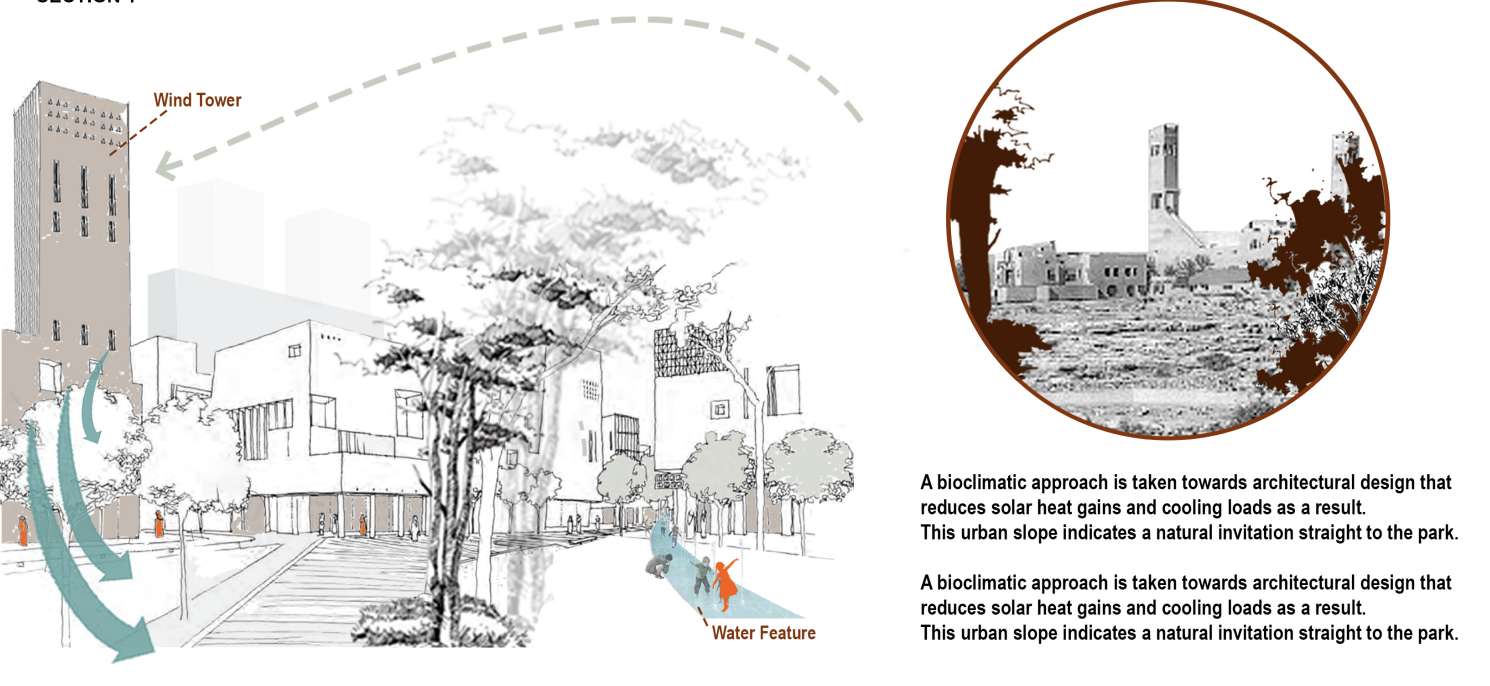
  • Integrates wind towers and water features for evaporative cooling

  • Reduces solar heat gain through a bioclimatic approach

The sloped morphology naturally draws movement toward the park, reinforcing its role as the project’s central anchor.

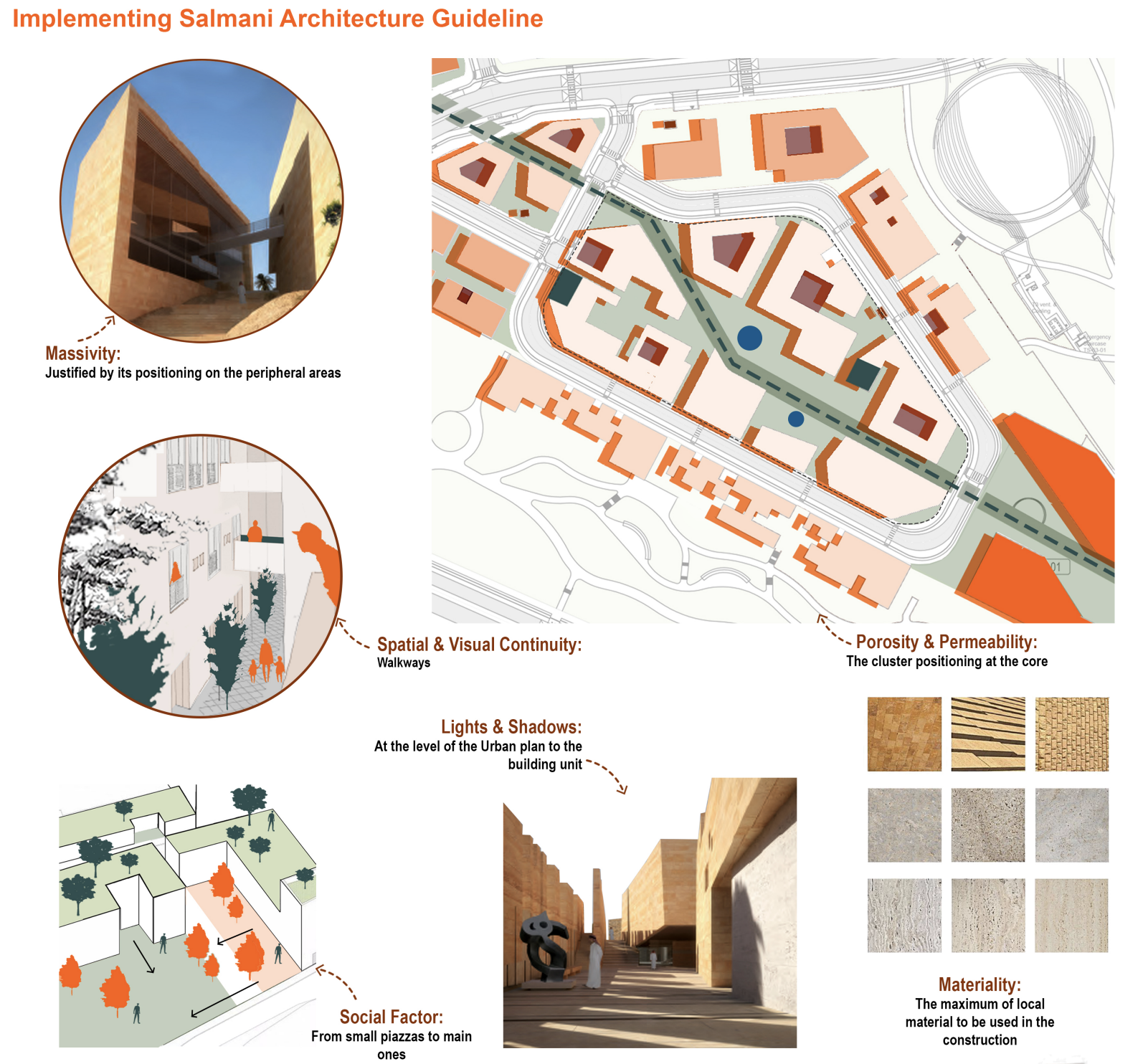
ARCHITECTURAL PRINCIPLES (SALMANI GUIDELINES)

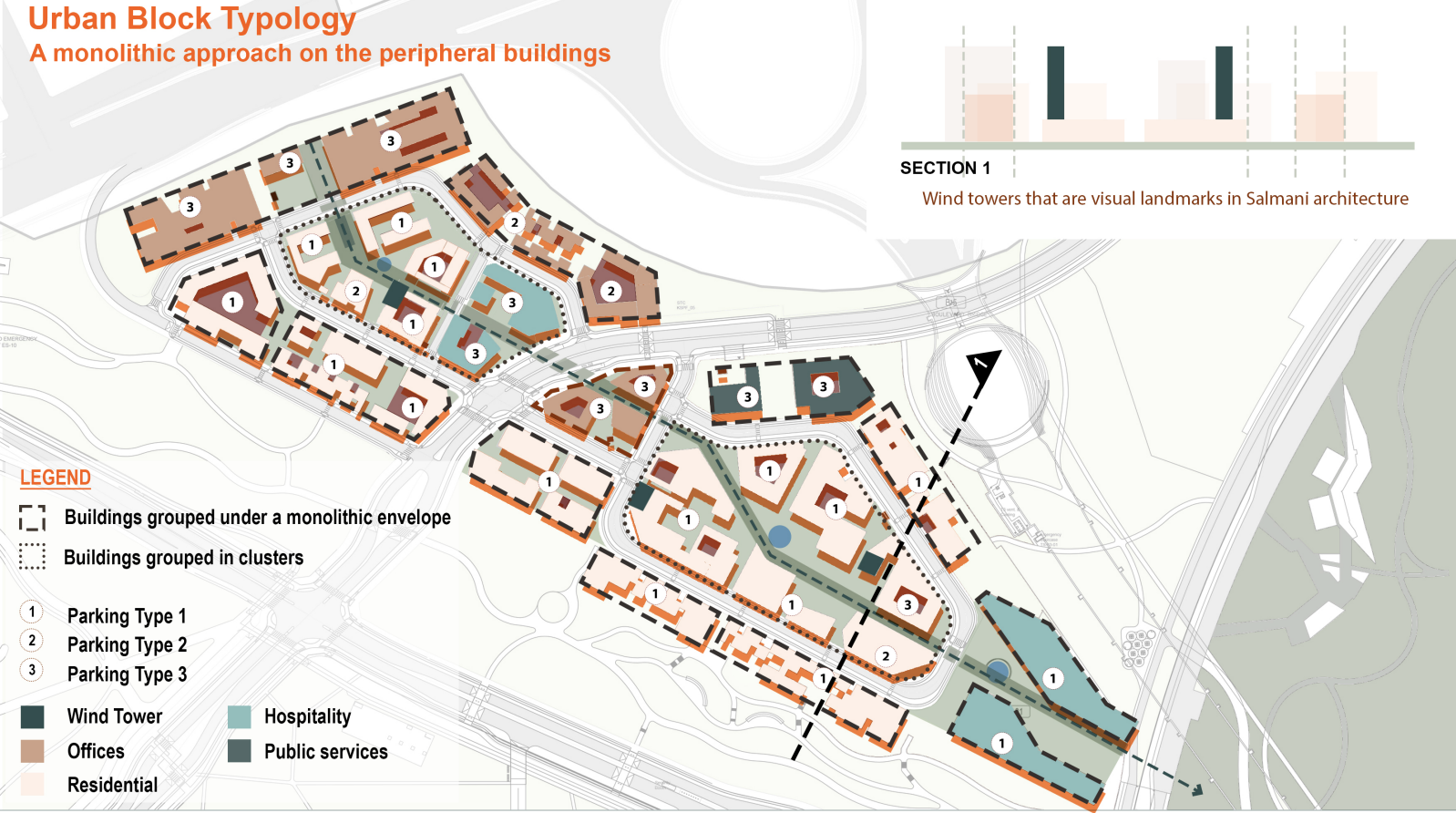
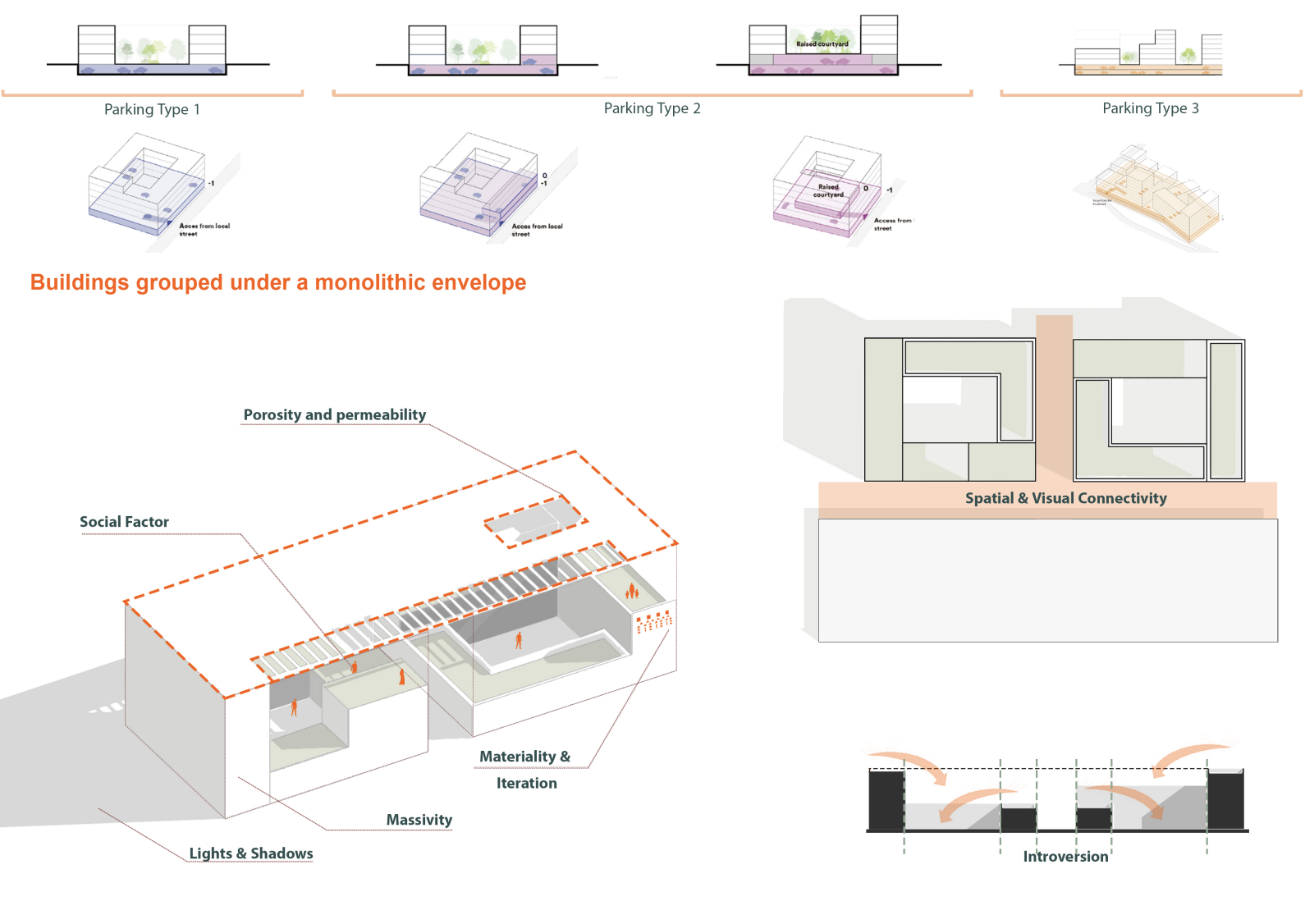
  • Massivity at the periphery

  • Porosity and permeability at the core

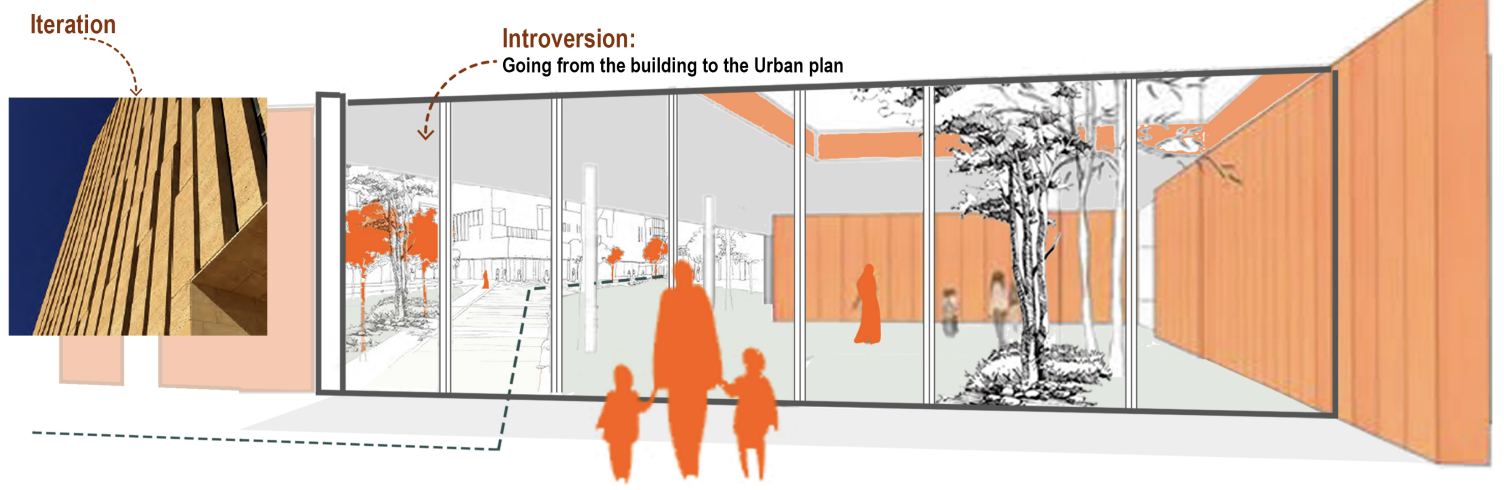
  • Introversion from building to urban scale

  • Spatial and visual continuity through walkways

  • Social hierarchy from intimate plazas to major public spaces

  • Local materiality

  • Light and shadow as structuring elements

CONNECTIVITY & PUBLIC REALM

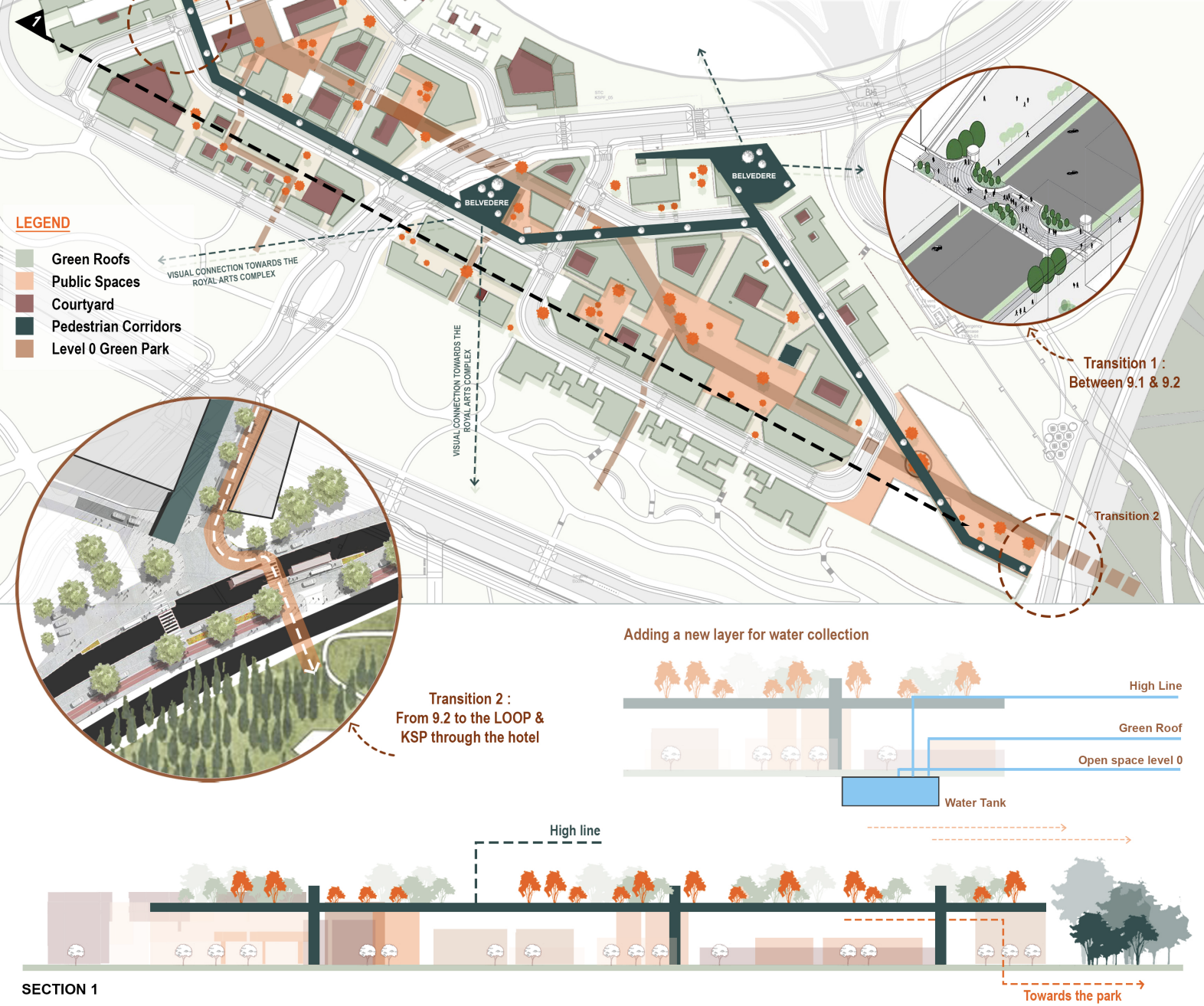
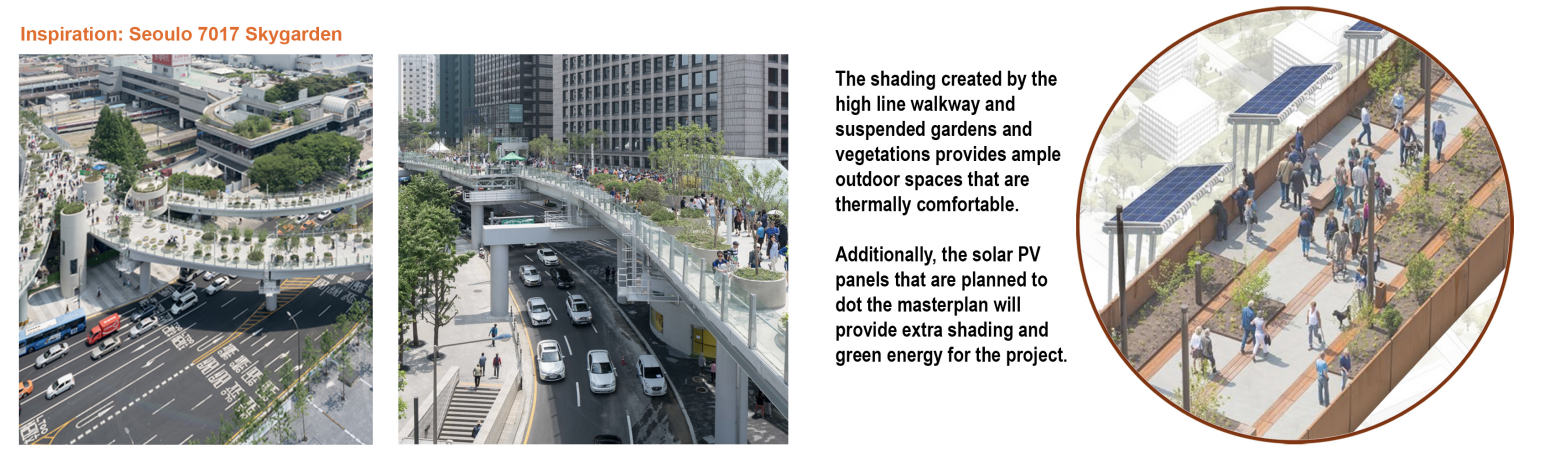
A high line pedestrian pathway acts as a continuous leisure and mobility spine:

  • Connecting visually and physically to the KSP loop and surrounding urban fabric

  • Creating shaded, thermally comfortable outdoor spaces through vegetation and suspended gardens

  • Integrating PV structures for both energy generation and shading

KEY ENHANCEMENTS

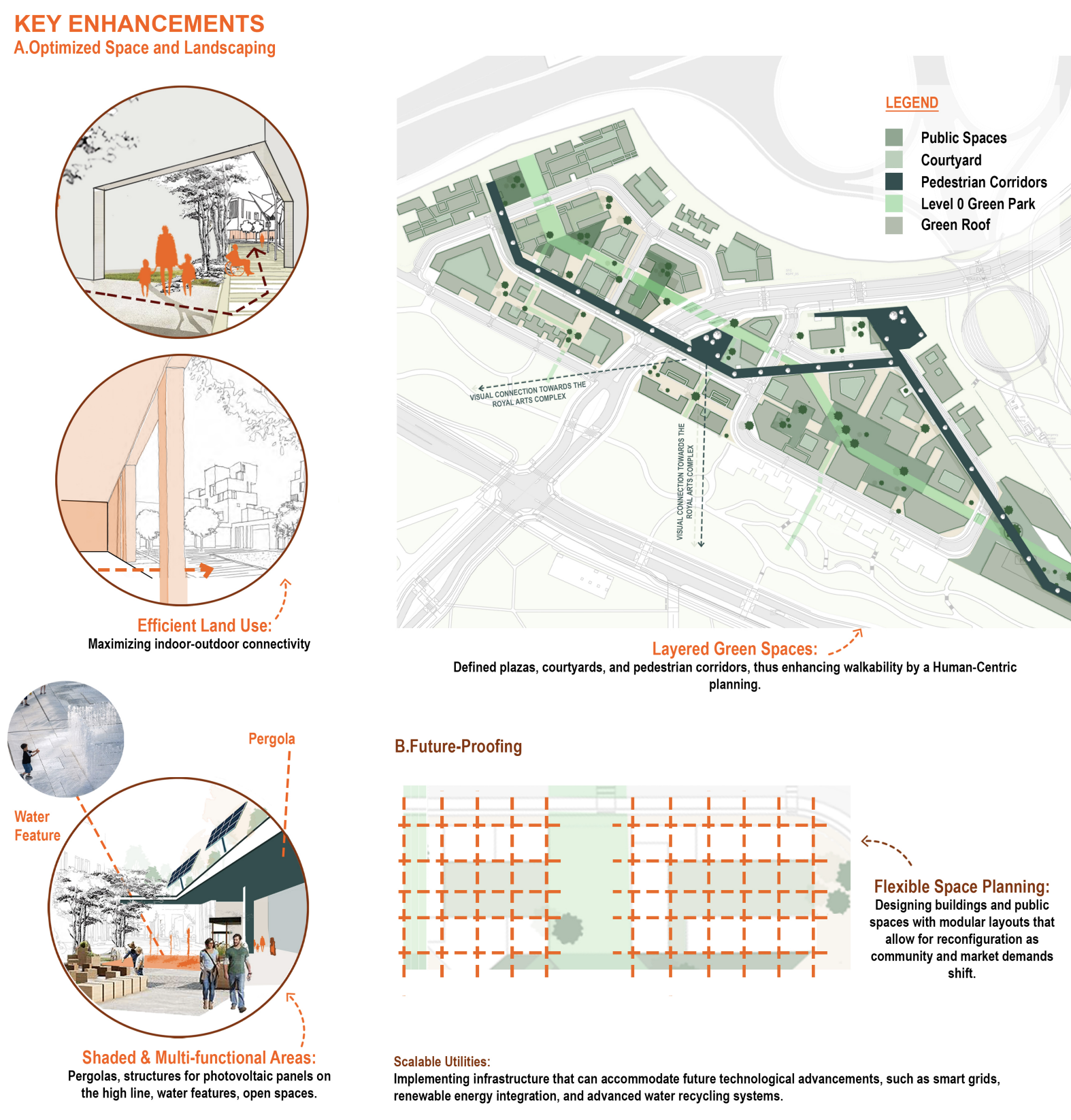
A. Space & Landscape Optimization

  • Layered green spaces: plazas, courtyards, pedestrian corridors

  • Shaded multifunctional areas with pergolas, PV structures, and water features

  • Strong indoor-outdoor continuity and enhanced connectivity across the site

B. Future-Proofing

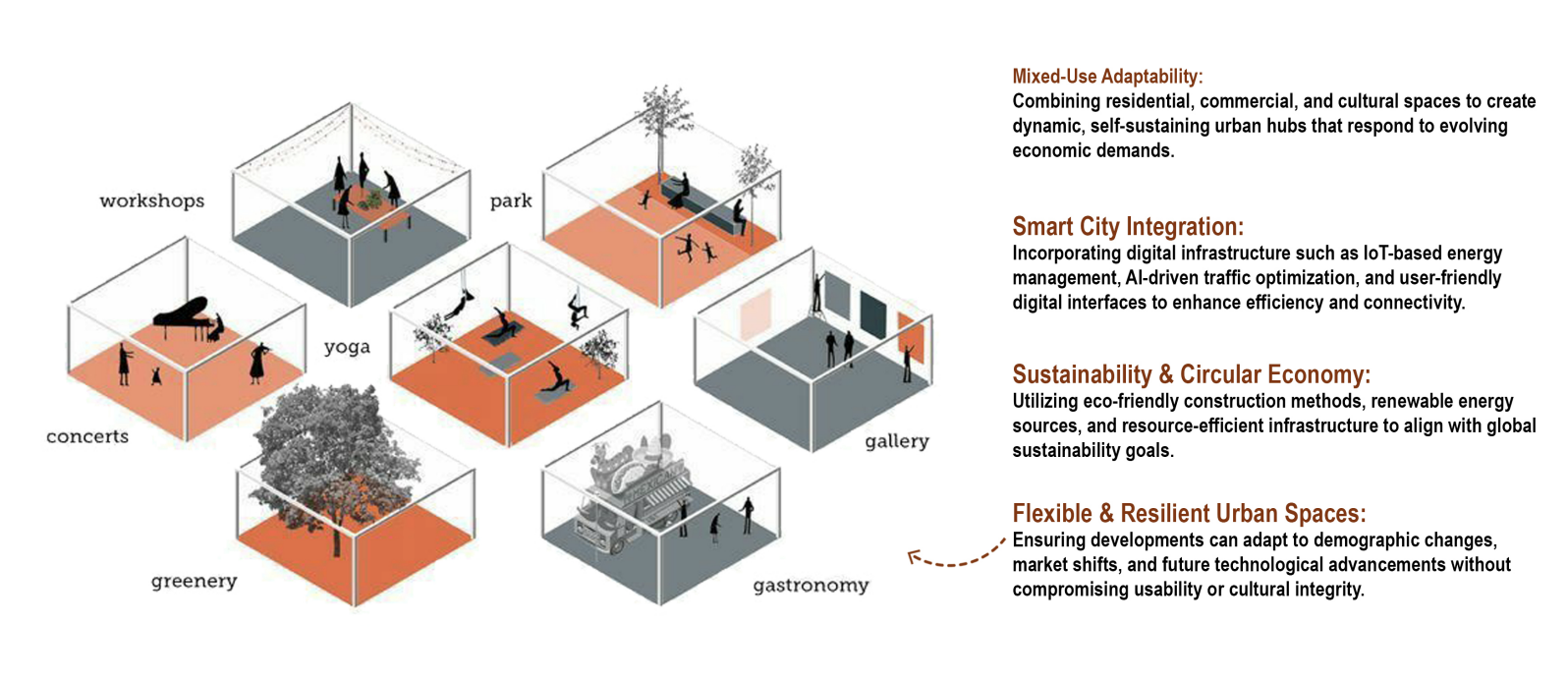
  • Flexible, modular spatial planning

  • Scalable infrastructure for evolving technologies

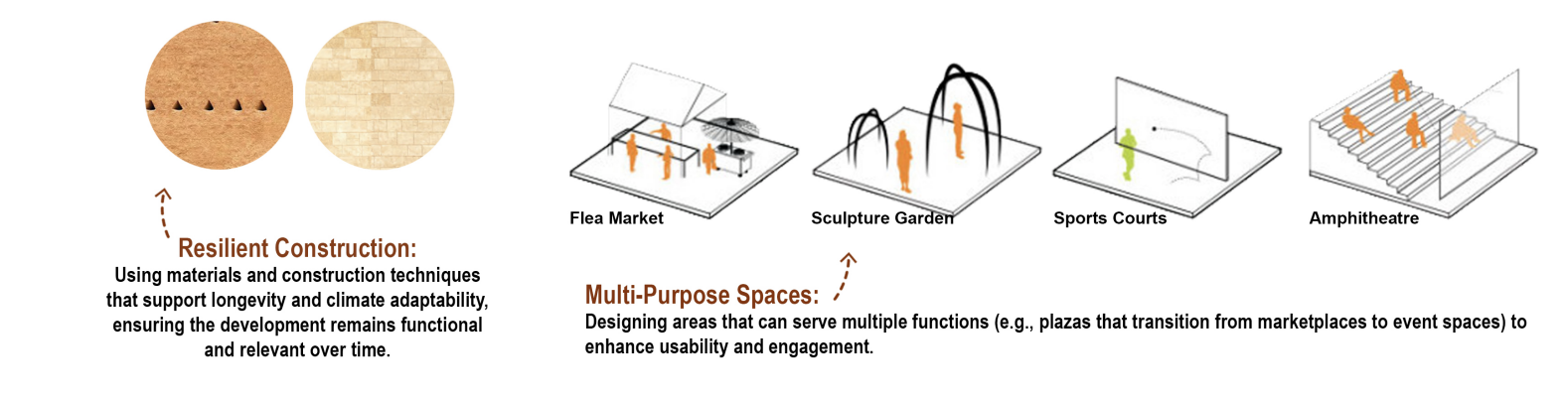
  • Durable, climate-adaptive construction

  • Multi-purpose spaces supporting changing uses over time

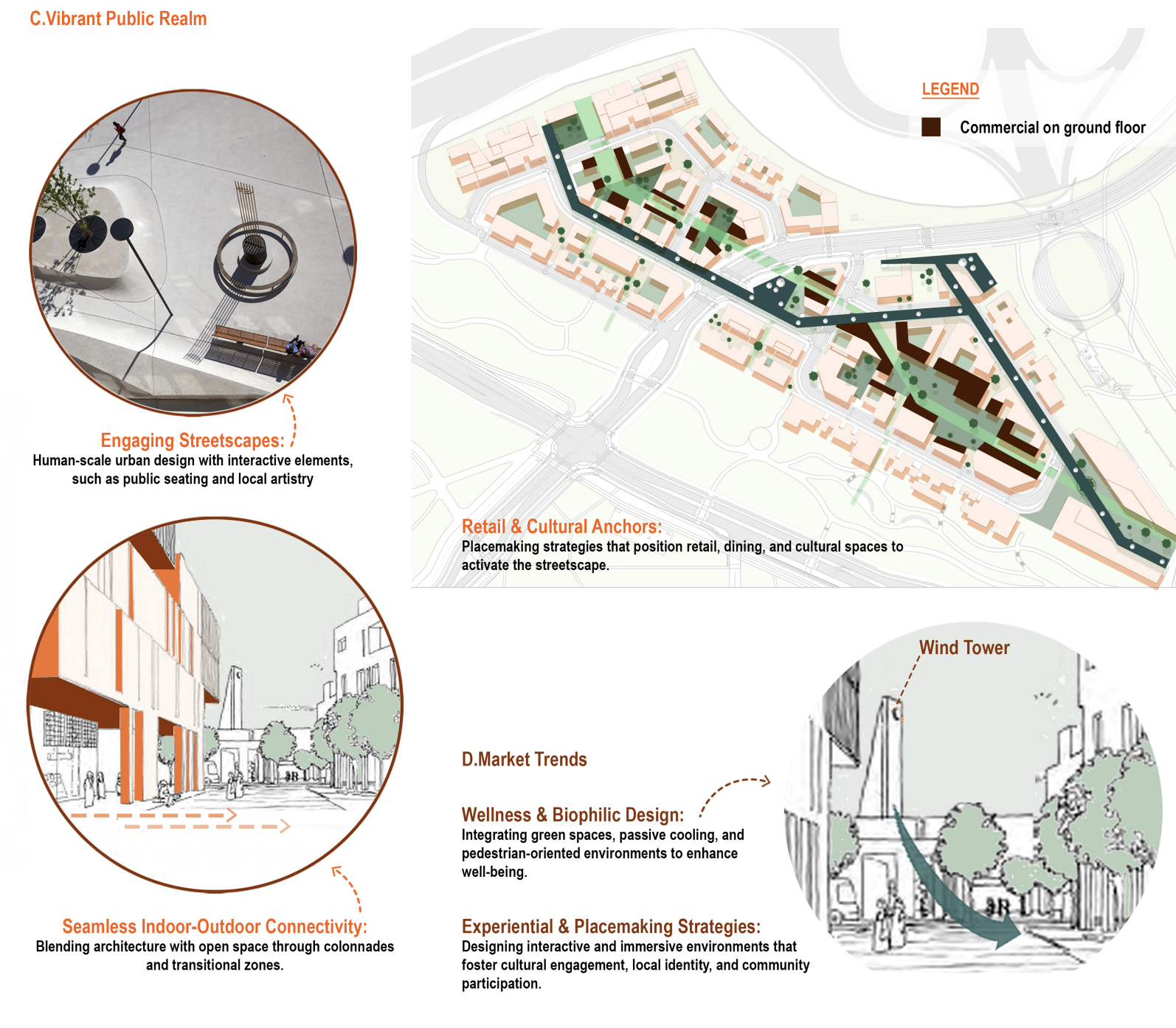
C. Vibrant Public Realm

  • Retail, cultural, and social anchors activating the streetscape

  • Human-scale design with interactive elements

  • Seamless transitions between built and open spaces

D. Market Alignment

  • Wellness-driven, biophilic environments

  • Experiential, identity-driven placemaking

  • Mixed-use, adaptable urban systems

  • Smart city integration and digital infrastructure

  • Sustainable, resource-efficient design

  • Resilient spaces adaptable to future needs.